

School Field Trip Transportation Grants sponsored by the Friends of Oregon RidgeCLICK HERE ►
Register for our Naturalist-Led Hikes – Me and My Pup on the Ridge or Senior StrollCLICK HERE ►
Learn about Volunteer Opportunities – Stewardship Work DaysCLICK HERE ►

Friends of Oregon Ridge
Speaker Series and Natural Science Book Club
Both of these programs require advance registration which can be done online by using the link below the program description.
If you would like to speak or have a suggestion for an interesting speaker please contact the Friends of Oregon Ridge at info@oregonridgenaturecenter.org.
Speaker Series
Adults
$10 per person
(FREE for Friends of Oregon Ridge Members)
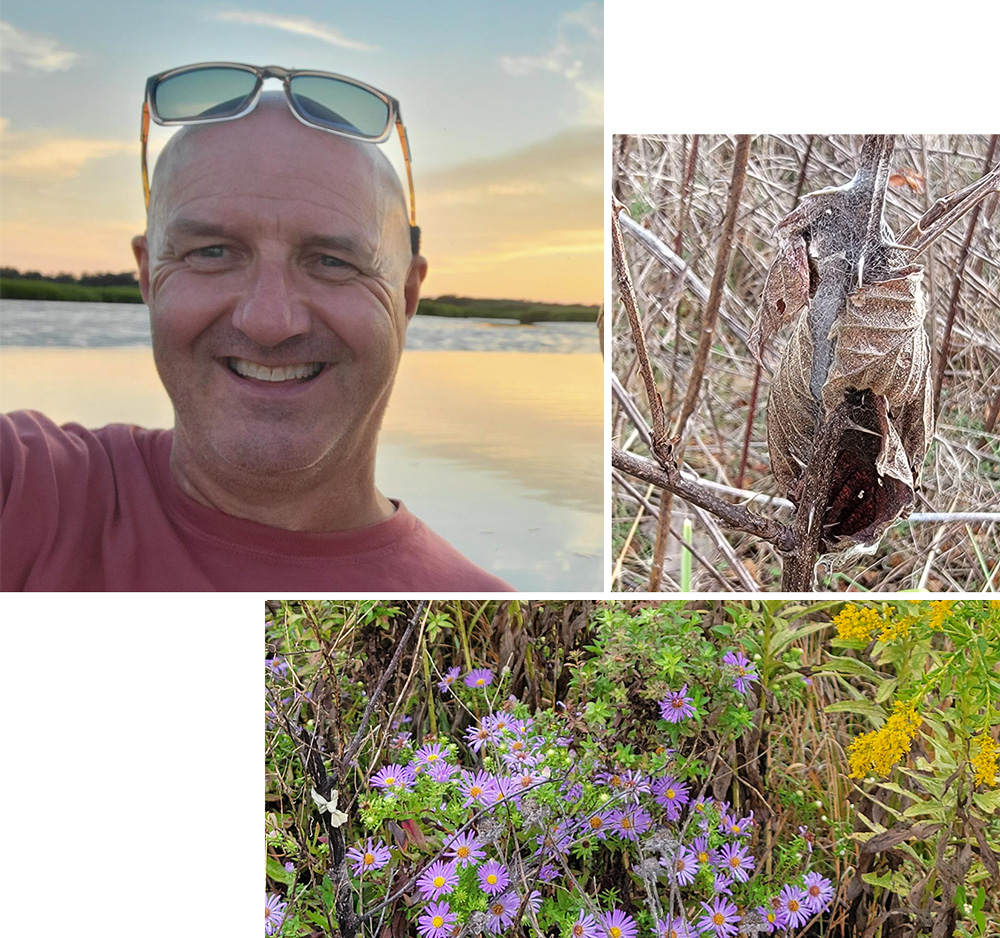
The Meadow Challenge
John Canoles, Principal/Ecologist, Eco-Science Professionals, Inc.
Tuesday, March 24; 7 – 8:30 p.m.
Old field/meadows provide a unique habitat that supports many species of plants and wildlife. Despite their value, old field and meadow habitats are often overlooked or dismissed and are under constant threat of impact by development, farming, natural succession and reforestation projects. This presentation will describe the characteristics and contributions of old field/meadows and highlight year-round wonders that can be found in an old field/meadow, like those at Oregon Ridge. We will learn about why old field/meadows are an ephemeral feature on the landscape and some ways you can help create and maintain these critical habitats.
John Canoles began his career as a weekend naturalist at the Oregon Ridge Nature Center and later served as a member of the board and president of the Oregon Ridge Nature Center Council. John is a principal/ecologist at Eco-Science Professionals, Inc., which provides full-service natural resource identification, assessment, and restoration services throughout the Mid-Atlantic.
John has long been a fixture in nature interpretation programs and projects regionally. He has served on the board of the Cromwell Valley Park Council, where he assisted in the design and creation of the Accessible Trail. John is on the board of directors at Ladew Topiary Gardens, where he helped design the Nature Walk at Ladew and the Native Butterfly House. John leads seasonal nature walks at Ladew and for the Harford Bird Club, the Natural History Society of Maryland, and Havre de Grace Bird City. John is currently the chairperson of Havre de Grace in Bloom and has been a long-time contributor to the “Nature’s Notes” column in the local The Country Chronicle newspaper.
Advance Registration Required – REGISTER NOW ►
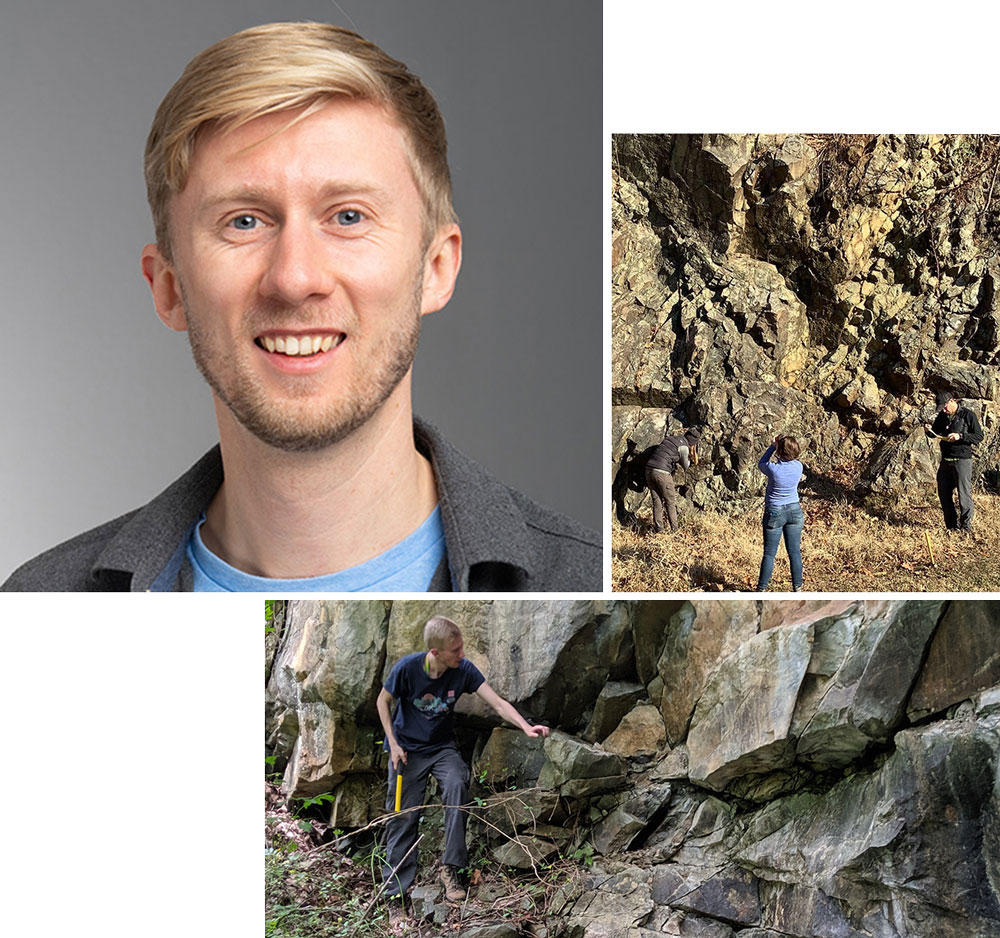
The Long-Gone Ocean Beneath Baltimore
George Guice, PhD, Assistant Professor, Towson University
Tuesday, April 21; 7 – 8:30 p.m.
500 million years ago, the rocks under Baltimore sat beneath a great ocean known as the Iapetus. But how did these rocks end up here? And why does the Earth no longer have an ocean called the Iapetus? And how do we know? Join us to learn how the rocks beneath our feet in Baltimore help us to understand the Earth.
The Appalachian Mountains are perhaps best known for the legendary Appalachian Trail, which traverses 14 US states and passes through areas of famed natural beauty, such as the Great Smoky Mountains and Blue Ridge Parkway. But much of the story of the formation of these mountains lies in the rocks of the Appalachian Piedmont, the region east of the Appalachians, which hosts several major US cities, including Baltimore. The Piedmont is underlain by crystalline rocks formed during the formation of the Appalachian Mountains 500–350 million years ago. These rocks contain clues to understanding the tectonic processes that formed these spectacular mountains. This presentation will highlight “ultramafic” and “mafic” rocks, the types of igneous rock that have helped us unravel a part of the tectonic story. We will discuss how some of these rocks – including rocks that underlie the city of Baltimore – are fragments of the long-gone ocean known as the Iapetus.
George Guice, PhD, is an Assistant Professor in the Department of Physics, Astronomy and Geoscience at Towson University, joining the faculty in Fall 2023. He teaches Structural Geology, Tectonics, Introductory Geology and Volcanoes & Earthquakes. A native of the United Kingdom, Dr. Guice moved to the US in 2019 for a postdoctoral position at the Smithsonian’s National Museum of Natural History, and later worked at Johns Hopkins University and the American Museum of Natural History.
Dr. Guice’s research focuses on understanding how and when plate tectonics started on Earth, and how it has evolved through geologic time. His work has taken him to four different continents, having conducted research fieldwork in Scotland, Finland, Italy, South Africa, Brazil, Canada and the US.
Dr. Guice was educated in the UK and holds a BSc in Geology with Physical Geography from Keele University, an MSc in Mining Geology from the University of Exeter, and a PhD in Geology from Cardiff University. Outside of academia, he is a keen amateur soccer player and loyally supports his local soccer team in the UK (Coventry City).
Advance Registration Required – REGISTER NOW ►